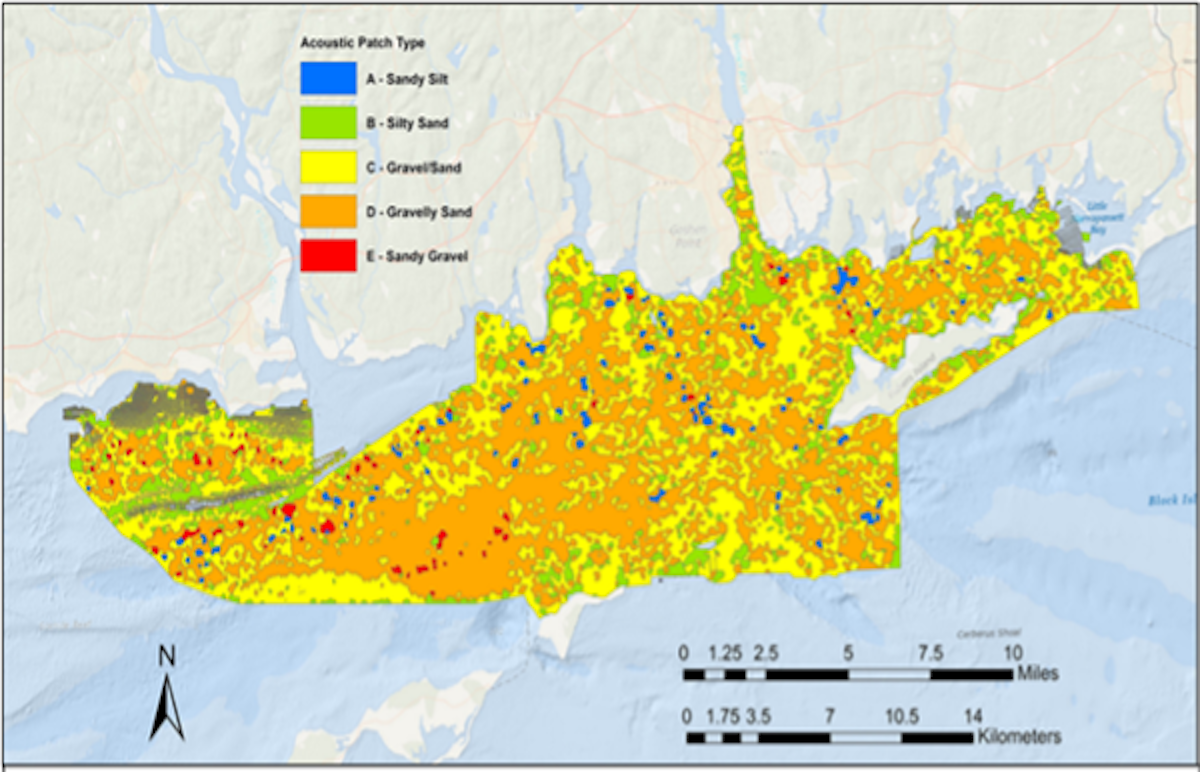
The ultimate goal of the Long Island Sound Seafloor Habitat Mapping Initiative is to generate maps that provide up to date information on the abundance and distribution of resources in the Sound to ensure wise management of this vital coastal ecosystem. All of the features of Sound – the geologic history, water depth, sediment type, water temperature and seafloor currents combine to form the patchwork of habitats that support a rich diversity of life. Ecological characterization of such diverse habitats requires a fine scale, multi-pronged approach that builds upon the larger scale mapping provided by the acoustic technologies. Scientists use the acoustic backscatter maps that identify the mosaic of bottom types to guide the selection of sampling sites for ecological sampling. This approach ensures that all of the habitats are sampled and importantly that the transition zones from one habitat type to another is also sampled as these have been shown to areas of high biological diversity. Understanding the relationships between these seafloor landscapes and the organisms that inhabit them is fundamental to realizing management goals.
Ecological Characterization comprises three major elements: 1) characterization of the infauna, ie what lives below the seafloor surface, in the sediments; 2) characterization of the epifauna, ie what lives on top of the seafloor sediments or attached to the harder substrates; and 3) development of habitat maps that integrate both infaunal and epifaunal data along with all of the information being collected by the LIS mapping teams to provide a very useful management tool.
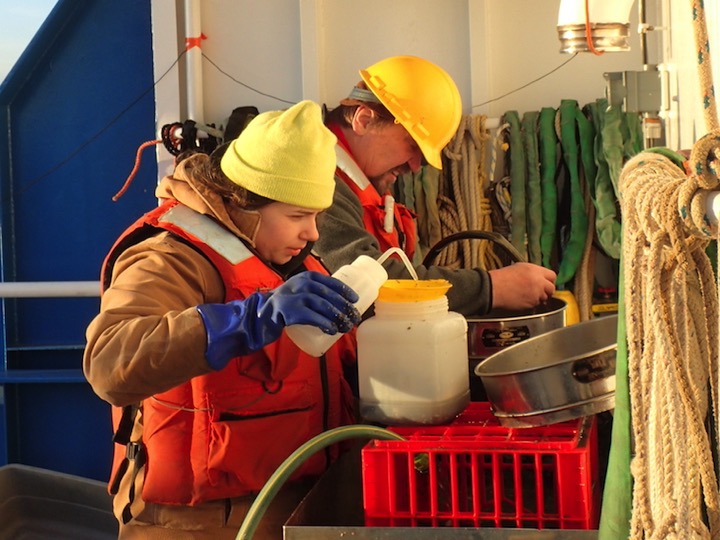
Infauna
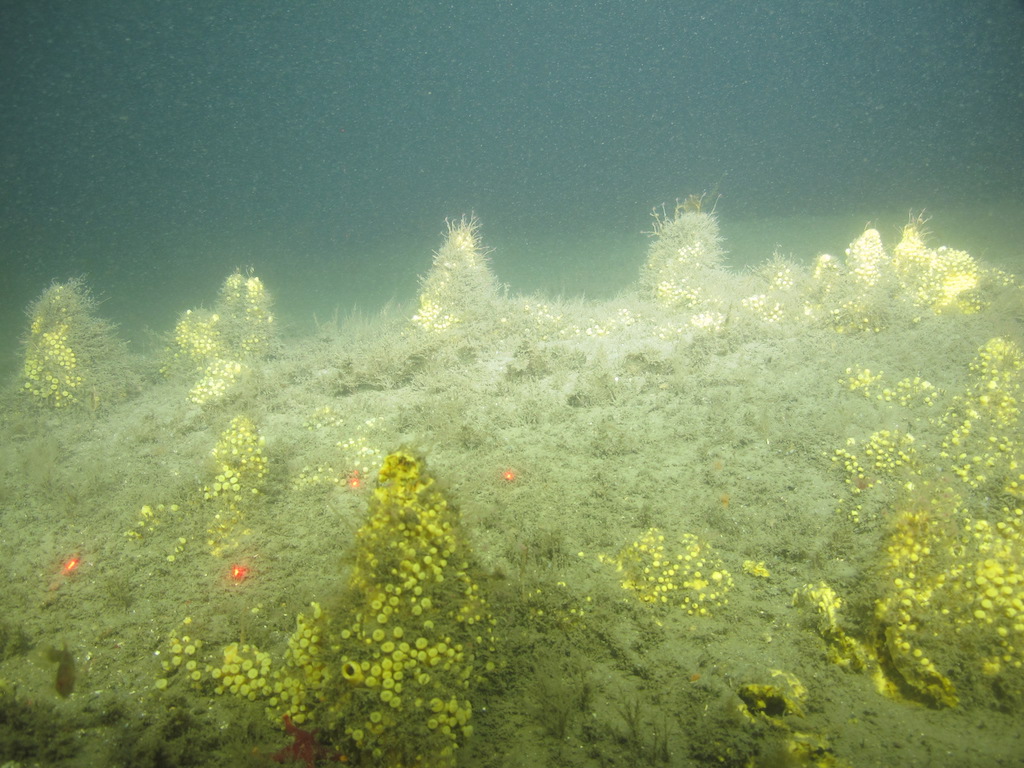
Epifauna
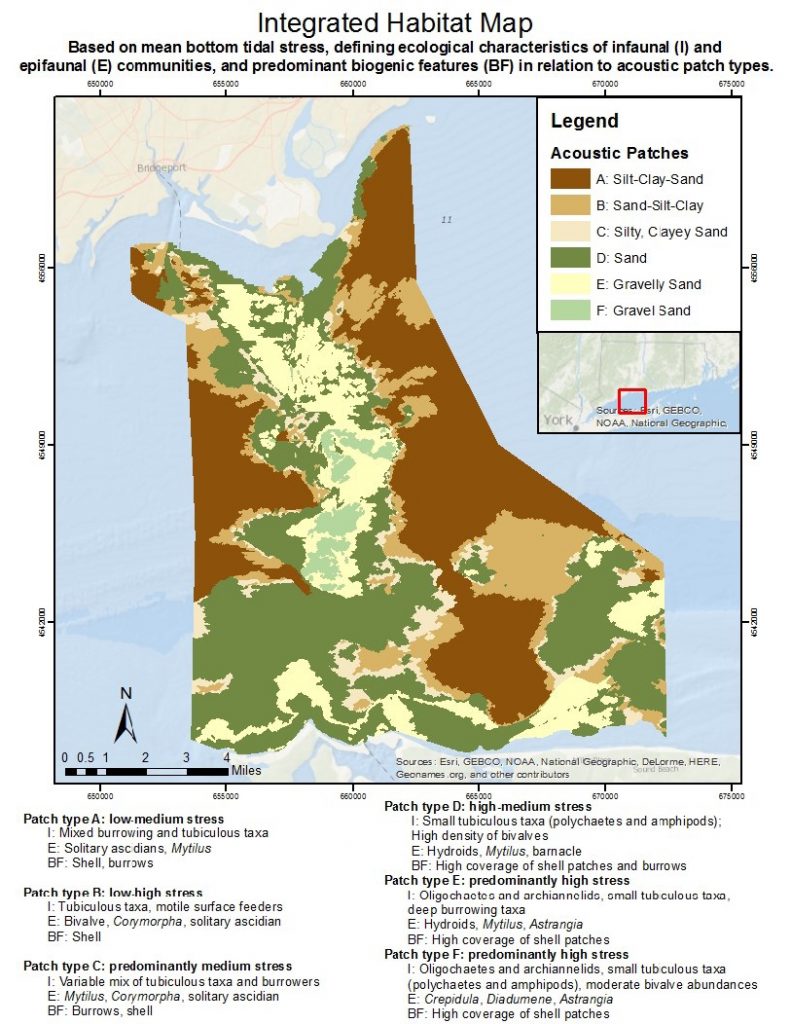
Integrated Habitat Map
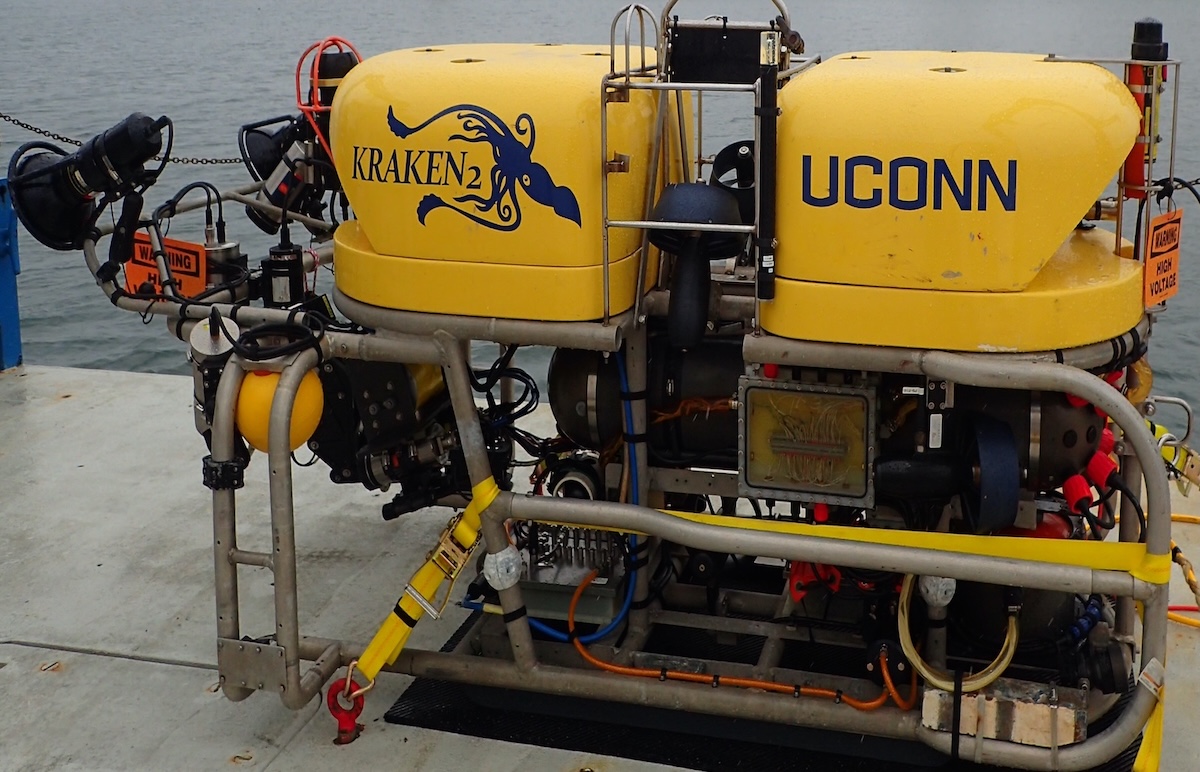
Ecological technologies
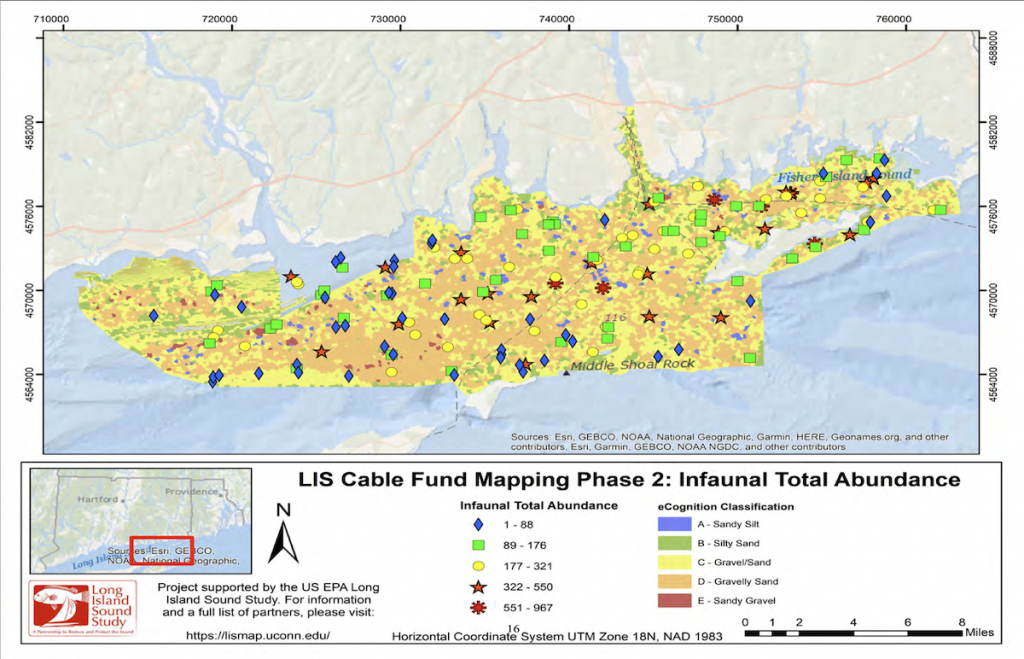
Infaunal communities comprise those organisms that live in seafloor sediments and/or just at the sediment water interface. As such, physical samplers provide soft sediment grabs that are then sifted on board the research vessel through either a 1 mm or 0.5 mm sieve depending upon the fineness of the sediments to collect all the organisms found within the grab. These infaunal samples are photographed, labeled and then preserved for subsequent analyses in the laboratory to identify and count the species from each grab. Map products are then developed that show the abundance, species composition and diversity for each of the sample sites.
Infaunal data products can be accessed through the Long Island Sound Data Navigator or the LDEO Long Island Sound Data Page.
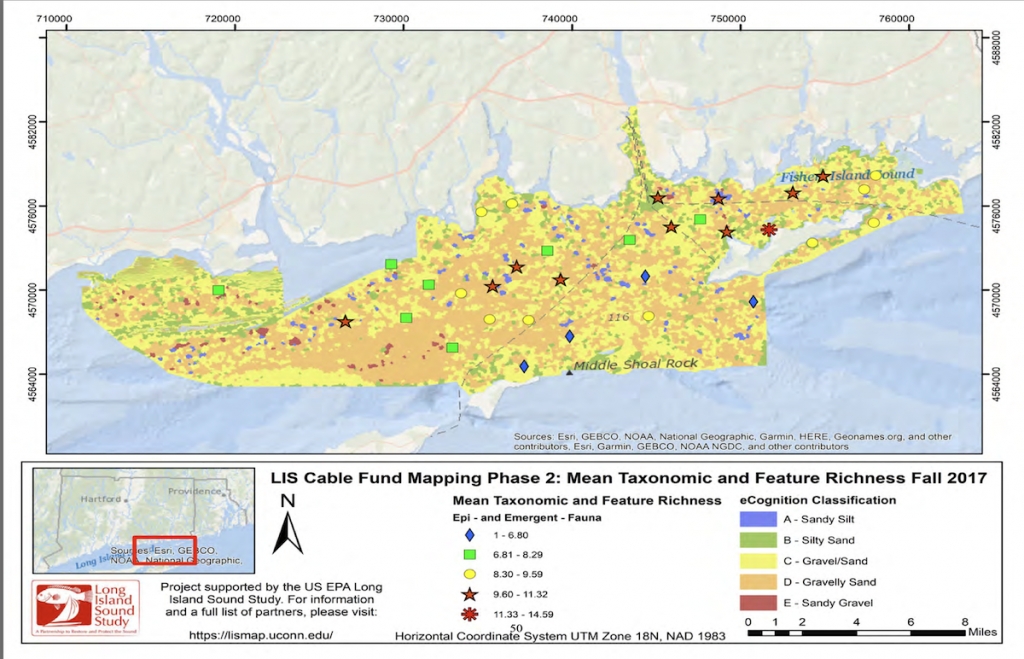
Epifanal communities are made up of the organisms living directly on the seafloor including the harder substrates and also the more fragile biogenic features or structures that form habitats themselves, bu can be disturbed by physical sampling. High resolution cameras produce digital stills that are reviewed using image analysis software to identify all of the organisms visible in the image. These data are augmented by high definition video that provides additional information on species not captured in the still images. Combined these approaches provide detailed information on the distribution, abundance and diversity of the epifauna of the Sound.
Epifaunal data products can be accessed through the Long Island Sound Data Navigator or the LDEO Long Island Sound Data Page.
Integrated Habitat Map
One of the most useful data products generated by the Long Island Sound Seafloor Mapping Initiative is the Integrated Habitat Map. These products are created by combining all of the mapping elements into one map. The developmnent of the map starts with the major patch types identified by the acoustic backscatter. The derived acoustic product, the Topographic Roughness Index further refines these classes. The results of the sediment data analyses that validated the bottom composition (grain size) are overlain. The dominant infaunal and epifaunal organisms are included for each patch type. Finally the physical bottom stress environment that these organisms encounter is also included. All of the factors are summarized to describe each of the habitat types.