Sediment Samplers
Acoustics can provide very accurate representations of the seafloor landscape – both the topography via high-resolution depth data and the nature of the seafloor via the backscatter signal strength. There are, however, a number of factors that can confound these measurements that mandate that actual physical samples of the seafloor be collected for detailed analyses of the sediment grain size.
SEABOSS – SEABed Observation and Sampling System
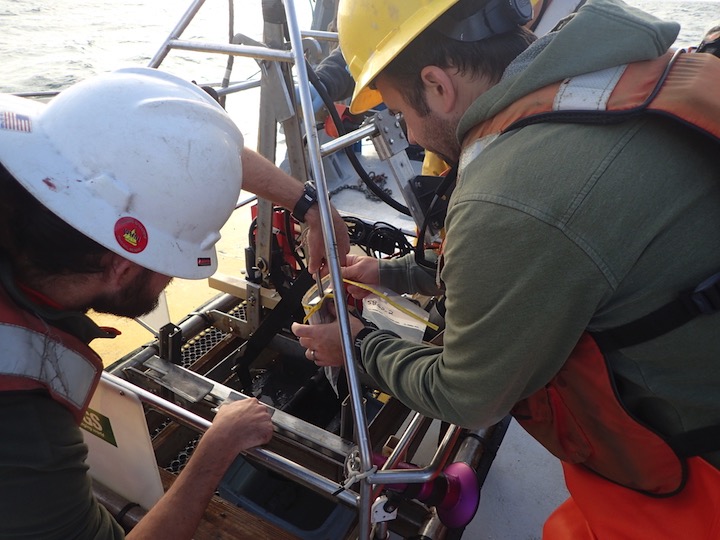
The US Geological Survey’s (USGS) Woods Hole Coastal and Marine Science Center developed the SEABOSS to obtain physical samples of the seafloor sediments and simultaneously image the bottom using high resolution digital still and video cameras. To acquire a grab sample for grain size analysis, the system is lowered to the seafloor, tripping a modified Van Veen grab that collects a 30 x 30 x 15 cm sediment sample.
Van Veen Sediment Sampler
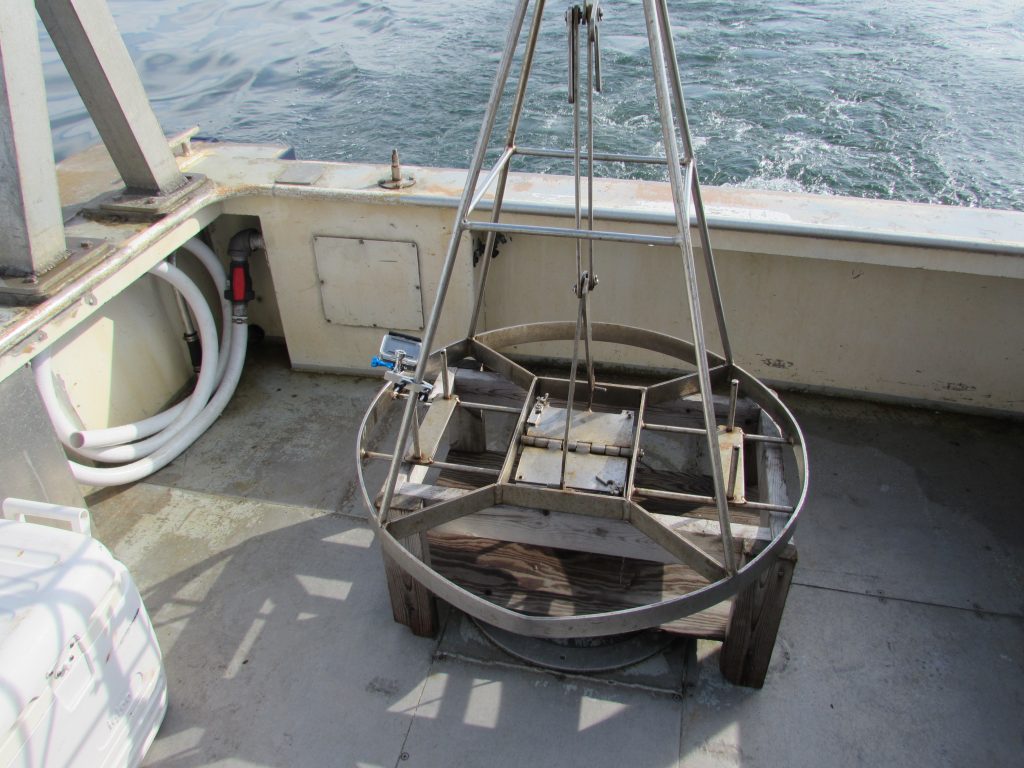
A stand alone modified Van Veen grab was used to collect sediment samples for grain size analyses. A GoPro camera was added to the grab to provide an image of the nature of the seafloor from which the samples were taken.
Sediment Cores
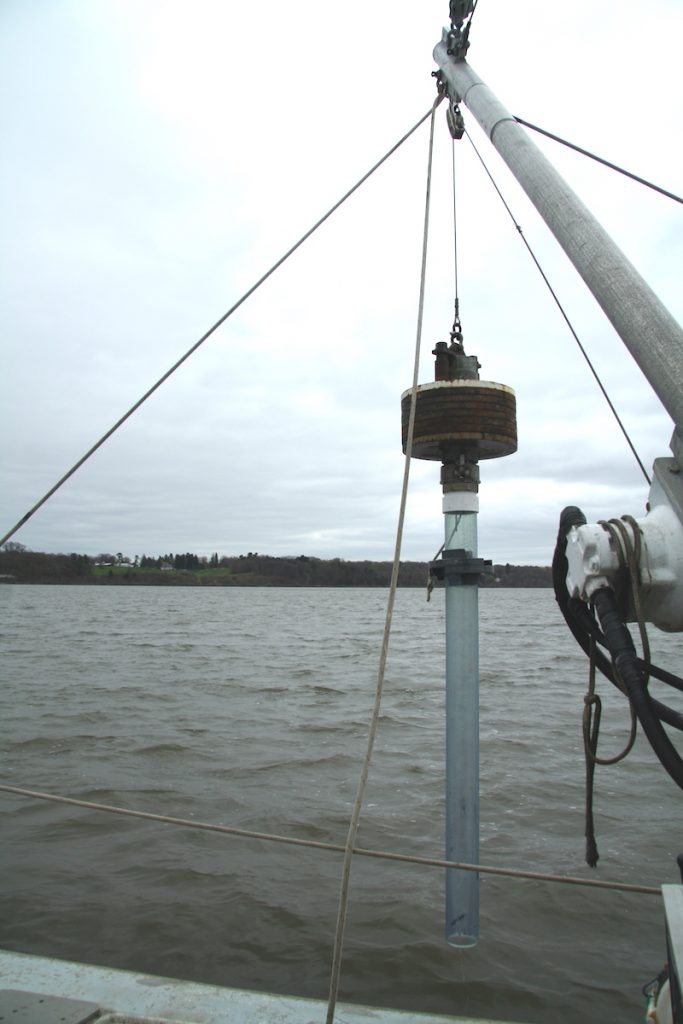
To better understand the long-term history of sedimentation in LIS, sediment coring is essential. Analysis of sediment cores will provide information on various geologic processes through time. The results will significantly improve our understanding of the present sedimentation patterns that will provide insights to guide future decisions for the health of ecosystems. For collecting the sediment cores, we used two systems. One is a gravity corer, consisting of a core head weighing 150 kg and a two-meter long by 11 cm diameter PVC pipe. The core head is equipped with a check valve that maintains a vacuum above the collected sediment. As the name implies, the system descends through the water column and penetrates the sediment by the force of its weight.
The other system was a hydraulic damped gravity corer, provided by the USGS’ Woods Hole Coastal and Marine Science Center, which allows for the recovery of sandy sediments that are difficult to retain in a normal gravity coring system. The hydraulic corer is a modified gravity corer operated from a quad landing frame that collects 11-cm diameter cores up to 65 cm in length in clear polycarbonate core barrels. In both systems, the clear liners allow visual inspection of the length and quality of sediment core as they are collected. This is essential for deciding to retry to take another core at a core location and to determine, if the surface of the sediment core is intact. Once on deck, sediment cores are capped, sealed with tape, and described. The overlying water is retained in the core barrel to reduce disturbance of the sediment during transportation and storage.
Sub-bottom Profiler
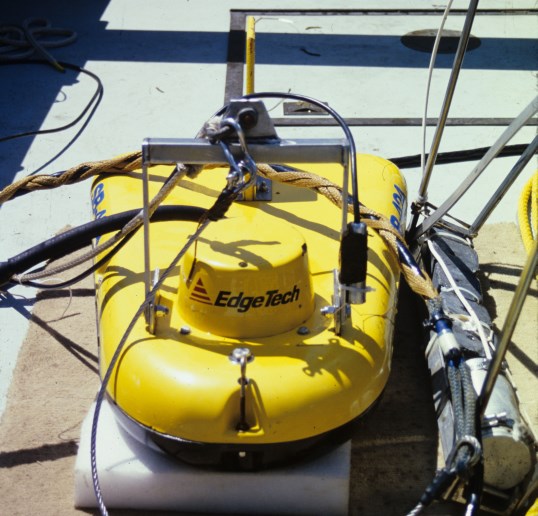
Sound is not only easily transmitted through water, at low frequencies (i.e. 2-24 KHz) it can also penetrate into the seafloor. The sound is reflected as it encounters features beneath the surface, providing an image of the layers that comprise the seafloor. Similar to the surface mapping sonars, harder layers return a stronger signal, while the sound penetrates further in softer bottoms. This technology is critical to measuring the sedimentary environments found in Long Island Sound and provides an historical record of the physical processes affecting the seafloor. Areas impacted by strong currents will feature harder, more reflective bottoms, while areas with lesser currents will be characterized by softer, muddier sediments that settle and are deposited on the seafloor. More detailed description of sub-bottom systems can be found here.pdf.